Evolution of Safety Management Software: From Paper to AI-Driven Safety
The Future of Workplace Safety with AI
The market for safety management software has grown rapidly over the past two decades. Today, organisations can choose from dozens of digital safety platforms, each offering modules for incident management, inspections, training tracking, and compliance reporting.
Despite their differences in branding and interface design, most safety management platforms are built on similar foundations: a cloud-based database, configurable workflows, and dashboards that visualise safety data. While these tools have improved accessibility and record-keeping, many simply digitise existing paper processes rather than transforming how safety is managed.
Generation I: Spreadsheet-Based Safety Systems
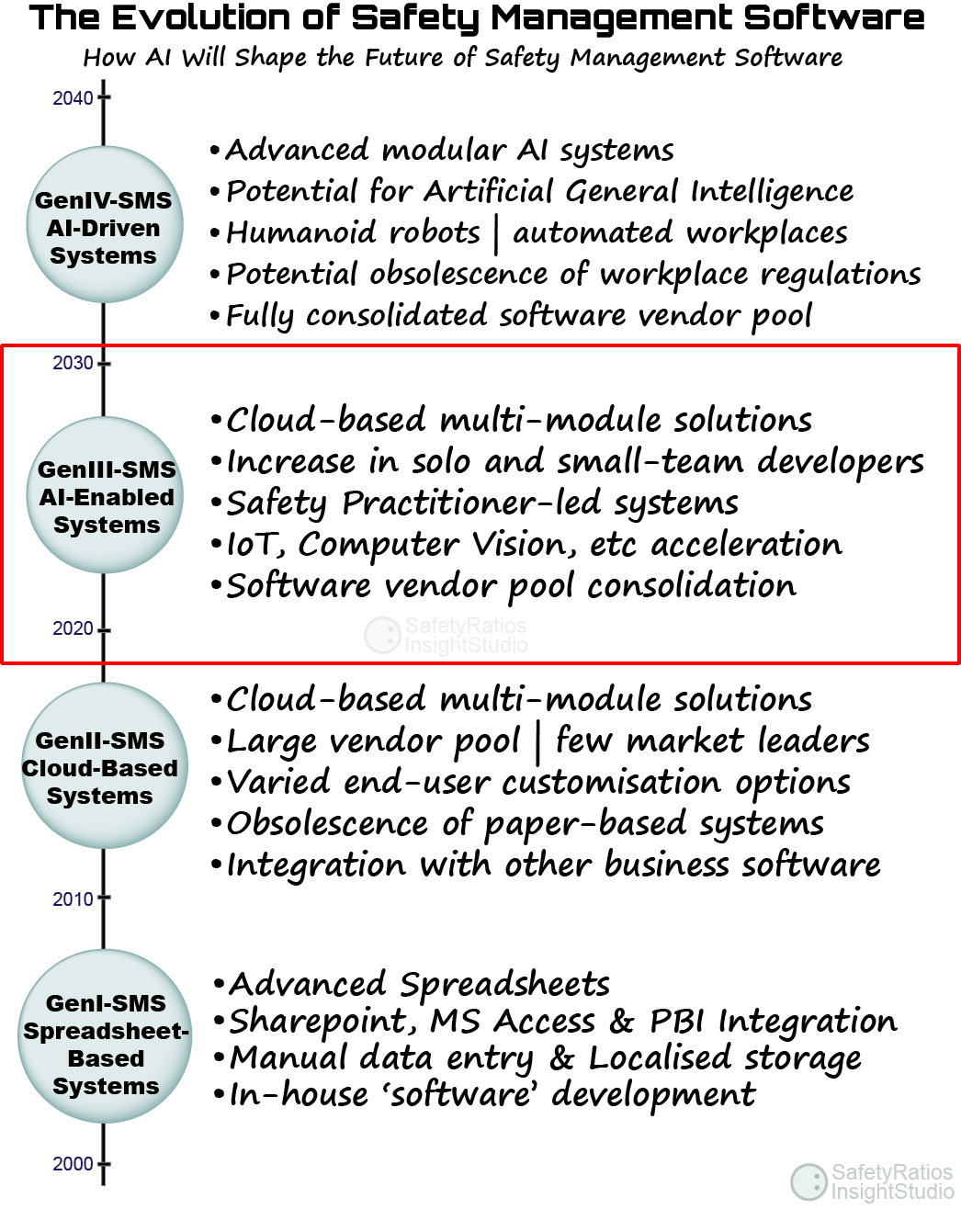
The earliest digital safety systems were spreadsheet-based tools developed internally by safety teams. These systems typically tracked incidents, training records, safety observations, and other metrics using simple tables and formulas.
Although basic, these systems marked the first attempt to move away from paper-based safety records. Some organisations expanded their spreadsheets with links to procedures, risk assessments, and shared document repositories.
Generation II: Cloud-Based Safety Platforms
The widespread adoption of cloud computing in the 2010s enabled a new generation of safety software platforms. These systems centralised safety documentation and made it accessible across sites through web interfaces and mobile devices.
Generation II platforms introduced modular systems for incident reporting, audits, training management, chemical management, and inspections. Data collected through digital forms triggered automated workflows and notifications, improving administrative efficiency.
While these systems improved accessibility and reporting capabilities, they still largely replicated existing safety processes rather than redesigning them.
Generation III: AI-Enabled Safety Software
The next stage of safety software evolution is driven by artificial intelligence and large language models. AI-assisted development tools allow smaller teams to build sophisticated safety platforms more quickly, increasing competition within the safety software market.
AI technologies will enable advanced capabilities such as automated incident classification, predictive risk analysis, and improved data interpretation. Integration with technologies such as computer vision, IoT sensors, and machine learning models will allow organisations to detect hazards and analyse safety trends more effectively.
Generation IV: AI-Driven Safety Ecosystems
Looking further ahead, the convergence of advanced AI systems may fundamentally change how safety management systems operate. Rather than simply recording safety data, future systems may analyse operational behaviour in real time and predict emerging risks before incidents occur.
These systems could integrate safety data with broader operational analytics, providing organisations with deeper insights into workforce behaviour, environmental conditions, and operational performance.
As safety software continues to evolve, the focus will shift from digitising paperwork to transforming how organisations understand and manage risk.
Frequently Asked Questions
What is safety management software?
Safety management software is a digital platform used to manage workplace safety processes such as incident reporting, risk assessments, inspections, training records, and compliance documentation.
What are the generations of safety management software?
Safety software evolution can be grouped into four generations: spreadsheet-based systems (Gen I), cloud-based modular platforms (Gen II), AI-enabled software development platforms (Gen III), and future AI-driven safety ecosystems (Gen IV).
How will AI influence safety management software?
Artificial intelligence will enable predictive safety analytics, automated reporting, computer vision hazard detection, and advanced risk modelling, allowing organisations to anticipate and prevent incidents more effectively.
Why did cloud technology transform safety software?
Cloud platforms allowed safety data to be centralised and accessed across multiple sites through web browsers and mobile devices, making safety systems more scalable and easier to maintain.
What is the future of safety management systems?
Future safety management systems will likely combine AI, IoT sensors, machine learning, and real-time analytics to detect risks earlier and support proactive safety management.