Field Brief on ISO 45001:2018 Clause 4.2
Translating the needs of workers, clients, and regulators into daily practice
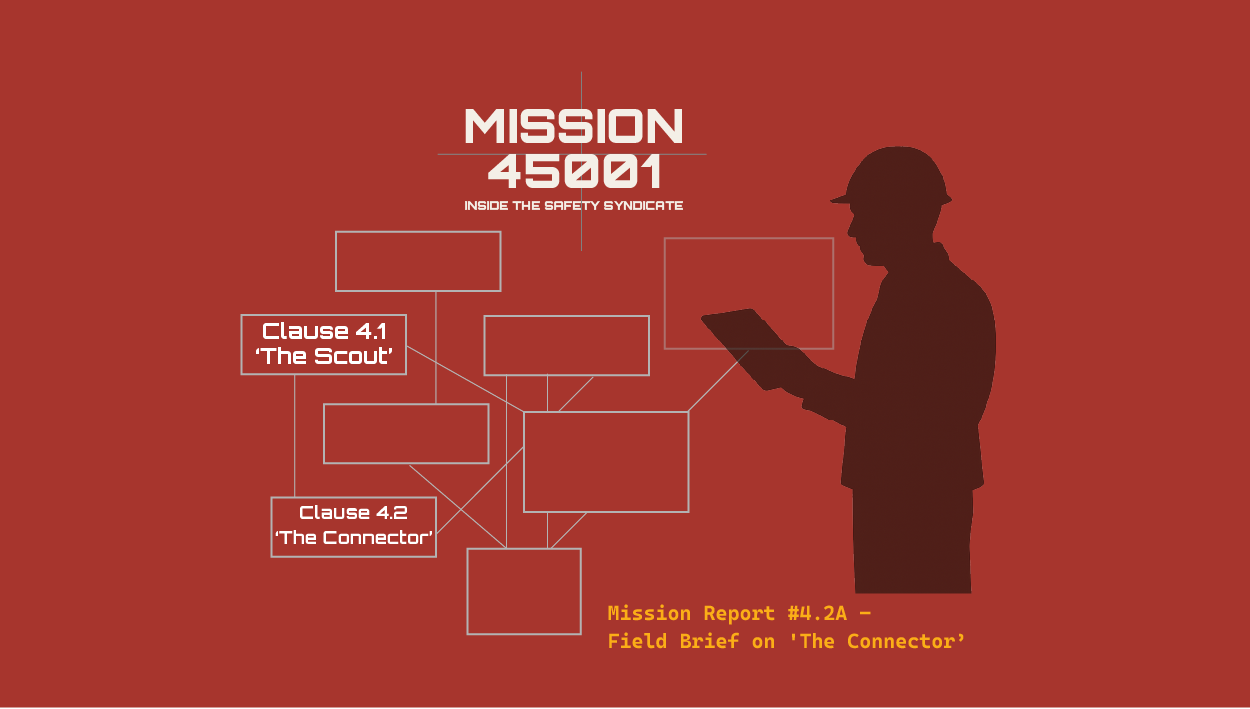
Mission 45001 is our deep dive into ISO 45001:2018, a network of clauses working together to help organisations run safe, resilient operations. Our mission is to show how that network works from the inside. This is our field brief on 'The Connector' of the safety syndicate.
This field brief examines ISO 45001:2018 Clause 4.2 and how operational teams turn the needs and expectations of workers, clients, regulators, and communities into the way work is actually done.
Within the LDP framework, Clause 4.2 works alongside Clause 4.1 in the scouting layer, where the expectations surrounding the organisation are identified before they are planned for, so that the management system stays matched to real stakeholder reality.
Clause 4.2 Requirements
Understanding the needs and expectations of stakeholders
- Clause 4.2 (a): The organization shall determine the other interested parties, in addition to workers, that are relevant to the OH&S management system
- Clause 4.2 (b): The organization shall determine the relevant needs and expectations (i.e. requirements) of workers and other interested parties
- Clause 4.2 (c): The organization shall determine which of these needs and expectations are, or could become, legal requirements and other requirements
- Documentation: There is no requirement to generate specific documents demonstrating compliance with Clause 4.2
What Understanding Stakeholders Means
Translating needs into system priorities
- Listening to workers: Capturing daily concerns and ideas, paying additional attention to those that may constitute specific legal or other requirements
- Supporting supervisors: Recognising operational pressures and expectations, identifying where these may need to be formalised into requirements or controls
- Engaging with clients: Considering expectations and contractual obligations, and determining which must be treated as binding requirements
- Complying with regulators: Interpreting legal duties and integrating them directly as enforceable system requirements
- Connecting with communities and partners: Reviewing external voices and assessing when these create social, reputational, or other applicable requirements
Why Understanding Stakeholders Matters
Turning voices into value
- Get the best out of workers: Meeting their needs improves safety, motivation, and daily task performance
- Make supervision efficient: Understanding team concerns allows supervisors to guide work more effectively
- Make processes adaptable: Feedback from the field keeps procedures flexible and practical under changing conditions
- Continuously align with client expectations: Awareness of client needs ensures safety and delivery standards stay credible
- Strengthen organisational resilience: Stakeholder insight informs strategy and drives continual improvement
Impact On Daily Work
How stakeholder needs shape the job
- Worker concerns surface: Feedback and expectations highlight risks or improvements in daily tasks
- Supervision adjusts: Oversight changes to reflect shifting team needs and operational pressures
- Processes evolve: Methods and controls are adapted to match practical realities and feedback loops
- Client requirements influence tasks: Standards, schedules, or quality expectations reshape site priorities
- Organisational focus shifts: Insights from stakeholders guide planning, resources, and long-term safety goals
Key Context Factors to Watch
Signals of shifting needs and expectations
- Worker feedback trends: Uptick in concerns, suggestions, or near-miss reports showing changing priorities on site
- Supervisor challenges: More requests for support or resource adjustments indicating pressure at the oversight level
- Process friction points: Recurring rework, inefficiencies, or improvement ideas highlighting adaptability needs
- Client expectation shifts: New standards, tighter schedules, or changing quality demands altering site focus
- Regulator and community signals: Updates, inspections, or local concerns shaping broader safety obligations
Risks of Misunderstanding Stakeholders
Poor Stakeholder Awareness = Weaker Safety
- Workers disengage: Ignored concerns reduce motivation and weaken safe behaviours
- Supervision loses credibility: Mismatched expectations make oversight less effective in the field
- Processes misalign: Controls and methods drift away from what tasks actually require
- Clients lose confidence: Unmet expectations damage trust, quality, and delivery reliability
- Regulators penalise: Legal duties overlooked can trigger fines, sanctions, or reputational damage
- Communities push back: Local concerns ignored may create opposition, complaints, or loss of licence to operate
- Organisation weakens: Strategic blind spots reduce resilience, compliance, and long-term performance
Benefits of Understanding Stakeholders
Good Stakeholder Awareness = Stronger Safety
- Workers engage fully: Their concerns addressed, motivation and safe behaviours improve
- Supervision gains credibility: Oversight is trusted when aligned with team realities and pressures
- Processes stay relevant: Controls and methods adapt smoothly to actual task requirements
- Clients build confidence: Expectations met strengthen trust, quality, and delivery reliability
- Regulators support compliance: Legal duties addressed reduce risk of penalties and build assurance
- Communities stay onside: Communities maintain goodwill and social licence to operate
- Organisation strengthens: Strategic alignment with stakeholders improves resilience and long-term performance
How the System Responds
The system adjusts to when stakeholder needs change
- Worker input is built in: Concerns and ideas from the taskface shape procedures and safeguards
- Supervisory roles adapt: Oversight methods shift to reflect team realities and resource demands
- Processes are refined: Feedback keeps methods relevant, practical, and compliant
- Client requirements are integrated: Standards, schedules, and deliverables flow into daily operations
- Legal duties are embedded: Regulatory obligations are translated into enforceable controls
- Community concerns are addressed: External expectations influence planning and site practices
- Strategy evolves: Stakeholder insights feed upward into resilience, priorities, and continual improvement
Role of Operations Team
Translating stakeholder needs into daily action
- Voice of the workers: Raise concerns and suggestions that keep tasks safe and practical
- Support for supervisors: Provide honest feedback so oversight stays relevant and trusted
- Input to process design: Share field experience to shape methods that work in real conditions
- Connection to clients: Highlight impacts of client requirements on safety and workflow
- Link to strategy: Feed insights upward so organisational decisions reflect reality on the ground
Making Stakeholder Needs and Expectations Operational
Turning voices into actions that shape safety
- Capture worker input: Collect concerns, suggestions, and feedback, paying attention to those that may require formalisation as specific requirements
- Support supervisors with insight: Share realities so oversight decisions remain credible, and identify needs that should be embedded into controls
- Adapt processes to fit needs: Adjust methods, procedures, and safeguards in response to expectations, determining when they must be treated as obligations
- Align with client and legal requirements: Integrate contractual demands, regulatory duties, and other applicable requirements directly into daily operations
- Feed lessons into strategy: Use stakeholder insights to improve resilience, ensure compliance, and guide continual improvement
Inside the Extended Edition
Ten Further Sections Available to Subscribers
- Policy implications: Shaping OH&S policy through stakeholder needs and expectations
- Leadership implications: Applying stakeholder expectations in leadership decisions and direction
- Planning implications: Integrating stakeholder expectations into OH&S planning
- Support implications: Aligning OH&S support systems with stakeholder expectations
- Operational control implications: Applying stakeholder expectations in operational controls
- Performance evaluation implications: Evaluating OH&S performance against stakeholder expectations
- Improvement implications: Driving OH&S improvement through stakeholder expectations
- Cultural implications: Embedding stakeholder expectations into safety culture
- System integration implications: Embedding stakeholder expectations across organisational systems
- Next steps: Stay Alert. Speak Up. Keep It Focused
Subscribers gain access to the complete presentation, while higher-tier members can download the full .pptx version for use in their own training programmes.
Background Data on 'The Connector', Clause 4.2
Focus: Understanding the Needs and Expectations of Interested Parties
- Codename: The Connector
- Function: Identifies and interprets the voices that influence OH&S outcomes
- System Role: Aligns stakeholder expectations with operational reality, shapes risk and compliance focus
- Syndicate Caucus: Works with The Scout (4.1), The Boss (5.1), The Advocate (6.1.3), and The Wire (7.4)
- Modus Operandi: Relational, alert, and tuned to shifts in perception, influence, or obligation
- Activation Threshold: Any change in stakeholder landscape, regulatory pressure, or community expectation
- Known For: Preventing blind spots, building trust, and keeping the system externally credible
- Field Signals: Client concerns, contractor disputes, workforce dissatisfaction, supply chain noise
- Boardroom Signals: Regulatory attention, investor questions, media interest, public scrutiny
- Audit Signals: Stakeholder maps, consultation records, unverified assumptions, unmet obligations
- PDCA Coordinates: Lives in Plan — and filters directly into Leadership, Risk, and Communication layers
Frequently Asked Questions
What does ISO 45001 Clause 4.2 require?
Clause 4.2 requires the organization to determine the other interested parties in addition to workers that are relevant to the OH&S management system, their relevant needs and expectations, and which of those needs and expectations are, or could become, legal requirements and other requirements.
Does ISO 45001 Clause 4.2 require documented information?
No. There is no requirement to generate specific documents demonstrating compliance with Clause 4.2.
Who counts as an interested party under ISO 45001?
Workers first, then supervisors, clients, regulators, communities, and partners, any party whose needs and expectations influence OH&S outcomes.
How do stakeholder needs change daily work?
Worker concerns surface risks and improvements, supervision adjusts to shifting team pressures, processes evolve to match practical realities, client requirements reshape site priorities, and organisational focus shifts to reflect stakeholder insight.
What are the risks of misunderstanding stakeholders?
Workers disengage, supervision loses credibility, processes drift from what tasks require, clients lose confidence, regulators penalise overlooked legal duties, communities push back, and the organisation develops strategic blind spots.