Strategy Brief on Respect
PAPA Said: On Respect as The Bedrock of a Resilient Culture
This strategy brief explores respect as a strategic driver of organisational culture and safety culture. It examines how respect functions as a guiding principle that shapes leadership intent, governance structures, and long-term organisational direction.
Within the LDP framework, respect operates in the Driving (Strategy) layer, where executive leaders embed cultural principles into vision, planning, and enterprise decision-making systems.
Respect as a Core Principle
Respect shapes sustainable leadership and organisational resilience
- Valuing people as assets: Every individual, regardless of level or background, is a source of capability and loyalty that drives long-term performance
- Recognising distinct contributions: Diverse perspectives and expertise sharpen strategy and enable innovation at scale
- Sustaining worth through setbacks: Even when actions fail, retaining belief in people protects engagement and accelerates recovery
- Honouring the unfamiliar: Extending respect beyond familiar networks strengthens trust and reduces blind spots in decision-making
- Seeing beyond the role: Leaders who value the person, not just the function, unlock discretionary effort and organisational commitment
- Belief in potential: Respect for untapped capacity fosters growth, succession strength and future-ready talent
From Respect to Action
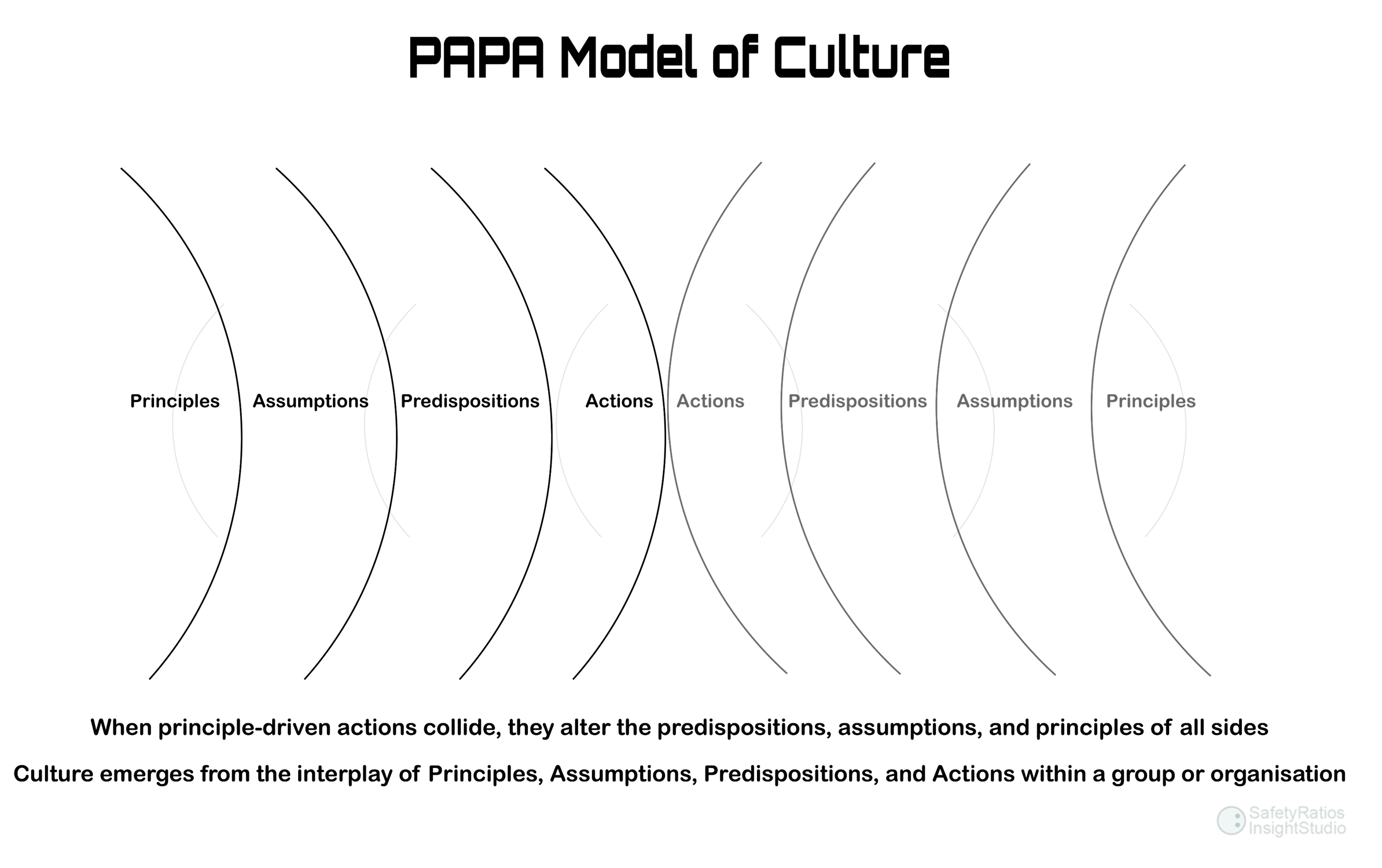
Outward flow of influence from principle to action
- Respect feeds strategic assumptions: Every person has capability and value that can be mobilised for organisational performance
- Strategic assumptions create leadership predispositions: A readiness to include diverse voices and listen beyond established circles
- Leadership predispositions drive systemic actions: Build policies, practices, and decisions that protect dignity, encourage participation, and recognise contribution
- When respect is weak: Assumptions drift toward exclusion, predispositions toward control, and actions toward compliance and dismissal
- Consistent respectful leadership actions: Strengthen respect as a governing principle until it becomes embedded in organisational culture
From Action Back to Respect
Inward flow of influence from Action back to Principle
- Leadership actions shape organisational predispositions: Consistent decisions signal fairness, inconsistency creates doubt and defensiveness
- Organisational predispositions reshape strategic assumptions: Repeated patterns of inclusion or exclusion influence what leaders and teams come to expect
- Reshaped assumptions reinforce or erode respect as principle: Sustained positives build belief in fairness and trust, sustained negatives undermine confidence in leadership
- Erosion alters culture at scale: When respect weakens, exclusion and dismissal become normalised within systems and strategy
- Morphed principles generate new cycles of action: Both strengthened and eroded principles set the tone for future assumptions, predispositions, and operational practice
Respect Breakdowns and Trade-offs
How respect is tested in leadership and organisational life
- Breakdowns occur under pressure: Competing priorities, time constraints, and stress can push leaders toward efficiency at the expense of dignity
- Trade-offs reveal priorities: Choices made between speed and inclusion, or control and empowerment, signal what the organisation truly values
- Small breaches carry systemic weight: Even minor dismissals or exclusions, when repeated, set precedents that shape culture
- Managing breakdowns with transparency: Acknowledging lapses and correcting them quickly rebuilds trust and prevents erosion of principle
- Strategic trade-offs anchored in respect: Balancing performance demands with dignity and fairness ensures sustainable outcomes
Respect in Communication and Decision-Making
Embedding respect into the processes that guide people and strategy
- Communication sets the cultural tone: How leaders speak and listen signals the level of respect expected across the organisation
- Decision-making reveals who counts: Inclusion or exclusion in critical choices determines whose perspectives are valued
- Transparent reasoning builds trust: Explaining not just what is decided but why reinforces fairness and strengthens credibility
- Respectful dissent strengthens outcomes: Encouraging challenge and alternative views improves strategy and prevents blind spots
- Consistent modelling by leaders: When communication and decisions are consistently respectful, the principle embeds as standard practice
Respect in Conflict Resolution and Dilemmas
Applying respect when stakes and tensions are high
- Conflict reveals cultural strength: How disagreements are handled shows whether respect is genuine or performative
- Respect frames resolution pathways: Approaching disputes with dignity and fairness preserves relationships while solving problems
- Dilemmas test principle under pressure: Choices between competing goods expose whether respect is foundational or negotiable
- Transparent handling builds resilience: Addressing conflicts openly and fairly reinforces trust and strengthens organisational culture
- Embedding respect in governance: Formal mechanisms for resolving disputes ensure consistency beyond individual leadership style
Leadership’s Role in Modeling Respect
Setting the standard for culture through visible behaviour
- Leaders signal values through action: Everyday choices and tone demonstrate what is truly respected in the organisation
- Modelling sets cultural expectations: When leaders practise respect, teams adopt it as normal and expected behaviour
- Inconsistency erodes credibility: Gaps between stated values and leader behaviour weaken both trust and culture
- Visible respect fosters legitimacy: Respectful conduct in difficult moments gives authority moral weight and strategic influence
- Sustained modelling embeds principle: Over time, consistent leader behaviour makes respect part of organisational identity
Respect as a Cultural Lever
Harnessing respect to shape organisational outcomes
- Respect drives cultural cohesion: Shared dignity and fairness unify diverse teams around common purpose
- Respect accelerates change adoption: People accept transformation more readily when they feel valued and included
- Respect strengthens governance: Fair processes and transparent decisions reinforce legitimacy and compliance
- Respect unlocks performance potential: Trust and inclusion release discretionary effort and foster innovation
- Respect safeguards long-term resilience: Embedding respect into systems and leadership practice protects culture under pressure
Reflecting on Respect in Practice
Pause to notice how respect is embedded and where it is at risk
- When has respect been most evident in your leadership? Consider decisions, communications, or actions that reinforced dignity and trust
- Where does respect consistently show up in organisational routines? Look at planning processes, governance forums, or performance reviews
- Where is respect missing or inconsistent? Pay attention to exclusion in decision-making, muted voices in debate, or gaps in accountability
- What leadership habit could shift the culture? Small choices in tone, timing, inclusion, or transparency can cascade into systemic change
- How do you lead under challenge or pressure? Respect is tested most in crisis, conflict, and rapid decision cycles
To explore how respect is integrated into policy, leadership, planning, support, operational control, and performance evaluation within ISO 45001-aligned safety management systems, consider becoming a subscriber.
Subscribers gain access to the complete presentation, while higher-tier members can download the full .pptx version for use in their own training programmes.
Frequently Asked Questions
Why should respect be treated as a strategic principle rather than only a cultural value?
Respect strengthens long-term organisational resilience by recognising people as sources of capability, innovation, and commitment. Strategic leaders who embed respect build legitimacy, adaptability, and sustainable performance.
How does respect influence strategic decision-making?
Respect promotes inclusive dialogue, transparency, and fairness in governance. Leaders who encourage diverse perspectives and respectful challenge improve decision quality and reduce strategic blind spots.
What risks arise when respect is absent at the strategic level?
A lack of respect can weaken governance, exclude voices from decisions, erode legitimacy, and create resistance to change. Over time this undermines trust and organisational cohesion.
How do executives model respect through strategy?
Strategic leaders model respect through consistent behaviour in resource allocation, communication, and governance decisions, demonstrating alignment between organisational values and strategic priorities.
How can respect be embedded during strategic conflict or dilemmas?
Embedding respect in governance processes ensures fairness and transparency when difficult decisions arise, preserving legitimacy and maintaining stakeholder trust during change or disruption.