Organisational Context: The Foundation of Effective Safety Management
How Context Shapes Safety Strategies and System Performance
Designing an effective safety management system begins with understanding the organisational context in which the system must operate. Context includes the organisation's purpose, operating environment, resources, workforce characteristics, and the pressures it faces in the market.
The central objective of any safety management system is to support safe operations over the long term. This requires managing current risks while also anticipating emerging risks that may arise as operations evolve.
The Importance of Context in Safety System Design
A safety management system that is not aligned with the organisation's real activities risks becoming disconnected from operations. When systems are copied from other organisations or built without understanding the core business processes, they often become bloated and ineffective.
Effective safety systems should directly support the organisation's core offering. For example, a design consultancy will face very different risks compared with a construction contractor. Their safety management systems must reflect those differences.
Understanding Materials and Production Processes
Every organisation transforms inputs into outputs. In construction or manufacturing this may involve physical materials and machinery. In design or consulting firms, the primary inputs are knowledge, expertise, and intellectual work.
Understanding these production processes helps safety professionals identify where risks truly exist and where safety controls should be focused.
Market Pressures and Resource Constraints
Safety initiatives must operate within the economic realities of the organisation. Even when safety is a priority, it still competes with other organisational objectives for resources.
Understanding market pressures such as tight deadlines, competitive pricing, or resource shortages allows safety systems to anticipate situations where shortcuts may be tempting and to introduce safeguards against them.
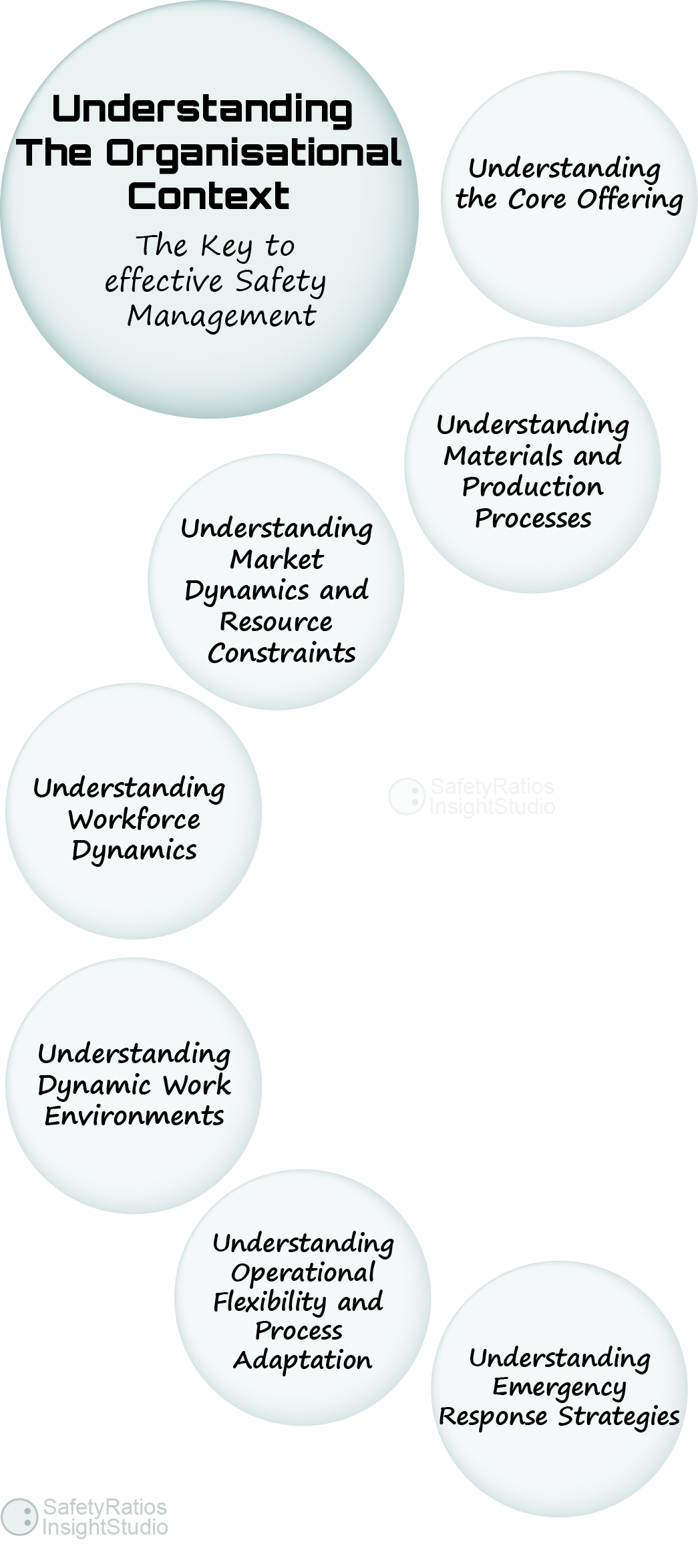
Workforce Characteristics and Safety Systems
The workforce plays a central role in how safety systems function. A highly specialised professional workforce may respond well to analytical safety guidance, while a more diverse workforce may require practical, visual, or simplified communication methods.
Tailoring training, communication, and procedures to the characteristics of the workforce greatly improves engagement with the safety management system.
Dynamic Work Environments
Operational environments constantly shift between routine operations, unexpected disruptions, and emergency situations. Safety systems must be flexible enough to adapt to these changing conditions rather than relying solely on rigid procedures.
Emergency Preparedness
Emergency response planning is an essential component of safety management. However, emergency procedures must reflect the specific operational environment rather than simply replicating generic industry templates.
For example, organisations located in urban environments may rely on nearby emergency services, while remote sites must develop more self-sufficient response capabilities.
Ultimately, a safety management system grounded in organisational context becomes more practical, adaptable, and effective. By understanding the realities of operations, safety professionals can design systems that genuinely support safe and sustainable performance.
Frequently Asked Questions
What is organisational context in safety management?
Organisational context refers to the internal and external conditions that influence how a safety management system operates, including the organisation's operations, workforce, resources, and market pressures.
Why is organisational context important for ISO 45001?
ISO 45001 requires organisations to understand their context so that safety management systems are tailored to the real risks, operations, and stakeholders involved.
How does organisational context affect risk management?
Understanding context helps identify where risks truly exist within operations and allows organisations to design safety controls that reflect real working conditions.
Why do generic safety systems often fail?
Generic safety systems may not align with the organisation's specific activities, workforce, or operational pressures, making them difficult to implement effectively.
How can organisations improve their safety management systems?
Organisations can improve safety systems by analysing their operations, workforce, environment, and market pressures to ensure the system reflects real conditions rather than generic templates.